Course Description
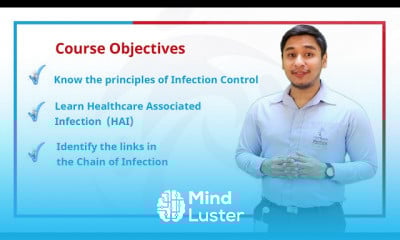
What is infection control in healthcare?
Infection control prevents or stops the spread of infections in healthcare settings. This site includes an overview of how infections spread, ways to prevent the spread of infections, and more detailed recommendations by type of healthcare setting.What are the 3 methods of infection control?
They include:
hand hygiene and cough etiquette.
the use of personal protective equipment (PPE)
the safe use and disposal of sharps.
routine environmental cleaning.
incorporation of safe practices for handling blood, body fluids and secretions as well as excretions [91].What is infection control and what are your responsibilities?
It means preventing and controlling illnesses that can be spread in the health-care. setting. The purpose of infection prevention and control is to identify and reduce. the risk of infections among patients, employees, medical staff members, contract.What is basic infection control?
These include standard precautions (hand hygiene, PPE, injection safety, environmental cleaning, and respiratory hygiene/cough etiquette) and transmission-based precautions (contact, droplet, and airborne).What are the five basic principles for infection control?
These include standard precautions (hand hygiene, PPE, injection safety, environmental cleaning, and respiratory hygiene/cough etiquette) and transmission-based precautions (contact, droplet, and airborne).How is infection control in hospitals?
Measures of infection control include identifying patients at risk of nosocomial infections, observing hand hygiene, following standard precautions to reduce transmission and strategies to reduce VAP, CR-BSI, CAUTI. Environmental factors and architectural lay out also need to be emphasized upon.