
 37 Lessons
 70 Students







Dr Mohamed gamal abozeid
جميل جدا
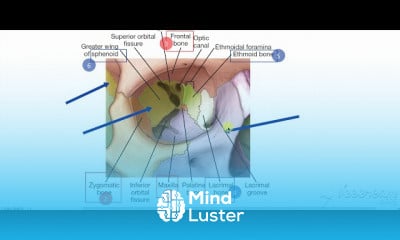
By definition, the orbit (bony orbit or orbital cavity) is a skeletal cavity comprised of seven bones situated within the skull. The cavity surrounds and provides mechanical protection for the eye and soft tissue structures related to it. The bones that make up the orbit contain several foramina and fissures through which important neurovascular structures (such as the optic nerve (CN II)) pass through on their way from the brain to the eye and face and vice versa. What is eye orbital bone? Orbital bones The eye socket, or orbit, is the bony cup surrounding your eye. Seven different bones make up the socket. The eye socket contains your eyeball and all the muscles that move it. Also inside the socket are your tear glands, cranial nerves, blood vessels, ligaments, and other nerves How many orbital bones are there? Orbital bones The orbit, which protects, supports, and maximizes the function of the eye, is shaped like a quadrilateral pyramid, with its base in plane with the orbital rim. Seven bones conjoin to form the orbital structure, as shown in the image below. What is the orbital region? Orbital bones The Orbital Region The orbits are a pair of bony cavities that contain the eyeballs; their associated muscles, nerves, vessels, and fat; and most of the lacrimal apparatus. The orbital opening is guarded by two thin, movable folds, the eyelids.
 To Register in Course you have to watch at least 30 Second of any lesson
 Identify the seven bones forming the orbital cavity and their anatomical relationships
Describe the structural features and shape of the orbital bones and their contribution to eye protection
Explain the neurovascular structures passing through orbital foramina and fissures, including the optic nerve and blood vessels
Analyze the functional significance of the orbital bones in supporting eye movement, vision, and soft tissue protection
Assess common orbital fractures and their impact on ocular and neurovascular integrity
Apply knowledge of orbital anatomy to diagnose orbital injuries and plan appropriate clinical interventions
Differentiate between the orbital and surrounding facial bones in terms of structure and function
Illustrate the spatial relationships within the orbital cavity relevant to surgical procedures and imaging techniques
Evaluate the role of the orbital bones in maintaining ocular health and facilitating visual function
Summarize the key features of the orbital region relevant to ophthalmology and maxillofacial practice
Describe the relationship between orbital anatomy and common ophthalmic conditions or diseases
Develop skills to interpret orbital anatomy in radiological images for accurate diagnosis
37 Lessons • 2 h 55 m total
 You must have an
Account
on the platform.
Complete all lessons.
Watch at least 50% of Lesson Duration.
Get your Certificate free 🎉 !
4.4
 (24 reviews)
Overall rating

Be the First One Review This Course
جميل جدا

By definition, the orbit (bony orbit or orbital cavity) is a skeletal cavity comprised of seven bones situated within the skull. The cavity surrounds and provides mechanical protection for the eye and soft tissue structures related to it. The bones that make up the orbit contain several foramina and fissures through which important neurovascular structures (such as the optic nerve (CN II)) pass through on their way from the brain to the eye and face and vice versa. What is eye orbital bone? Orbital bones The eye socket, or orbit, is the bony cup surrounding your eye. Seven different bones make up the socket. The eye socket contains your eyeball and all the muscles that move it. Also inside the socket are your tear glands, cranial nerves, blood vessels, ligaments, and other nerves How many orbital bones are there? Orbital bones The orbit, which protects, supports, and maximizes the function of the eye, is shaped like a quadrilateral pyramid, with its base in plane with the orbital rim. Seven bones conjoin to form the orbital structure, as shown in the image below. What is the orbital region? Orbital bones The Orbital Region The orbits are a pair of bony cavities that contain the eyeballs; their associated muscles, nerves, vessels, and fat; and most of the lacrimal apparatus. The orbital opening is guarded by two thin, movable folds, the eyelids.
Experience the full power of Mindluster with Premium.
No distractions, just pure education.
Cancel your subscription anytime