
 18 Lessons
 137 Students






Begari Srilatha
Good
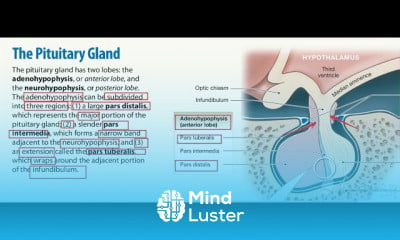
Pituitary tumors are abnormal growths that develop in your pituitary gland. Some pituitary tumors result in too much of the hormones that regulate important functions of your body. Some pituitary tumors can cause your pituitary gland to produce lower levels of hormones. Most pituitary tumors are noncancerous (benign) growths (adenomas). Adenomas remain in your pituitary gland or surrounding tissues and don't spread to other parts of your body. There are various options for treating pituitary tumors, including removing the tumor, controlling its growth and managing your hormone levels with medications. Your doctor may recommend observation — or a ''wait and see'' approach. Not all pituitary tumors cause symptoms. Sometimes they are identified incidentally on an imaging test such as an MRI or CT performed for some other reason. Pituitary tumors that make hormones (functioning) can cause a variety of signs and symptoms depending on the hormone they produce. The signs and symptoms of pituitary tumors that don't make hormones (nonfunctioning) are related to their growth and the pressure they put on other structures. Large pituitary tumors — those measuring about 1 centimeter (slightly less than a half-inch) or larger — are known as macroadenomas. Smaller tumors are called microadenomas. Because of the size of macroadenomas, they can put pressure on the normal pituitary gland and nearby structures. Signs and symptoms related to tumor pressure Signs and symptoms of pressure from a pituitary tumor may include: Headache Vision loss, particularly loss of peripheral vision
 To Register in Course you have to watch at least 30 Second of any lesson
 Identify different types of pituitary tumors and their characteristics, including benign adenomas and malignant growths, using medical terminology and imaging techniques
Explain the hormonal functions of the pituitary gland and how tumors can disrupt hormone regulation, causing various symptoms
Assess the clinical signs and symptoms associated with functioning and nonfunctioning pituitary tumors, including hormonal imbalances and pressure effects
Describe diagnostic procedures such as MRI and CT scans used to detect pituitary tumors and evaluate their size and impact
Evaluate treatment options for pituitary tumors, including surgical removal, medication management, and observation strategies
Analyze potential complications of pituitary tumors, such as vision loss, hormonal deficiencies, and tumor growth effects on surrounding tissues
Develop patient management plans that incorporate hormone level monitoring, symptom control, and personalized treatment approaches
Apply knowledge of pituitary tumor pathology and treatment to real-world clinical scenarios and patient case studies
18 Lessons • 1 h 25 m total
 You must have an
Account
on the platform.
Complete all lessons.
Watch at least 50% of Lesson Duration.
Get your Certificate free 🎉 !
5.0
 (2 reviews)
Overall rating

Be the First One Review This Course
Good

Excellent lesson
Very use full our studies
this course is very good.this was helped me a lot to unstand the given topic as i choose.THANK U VERY MUCH.
Useful
Very useful
Very clear and very useful lessons

Pituitary tumors are abnormal growths that develop in your pituitary gland. Some pituitary tumors result in too much of the hormones that regulate important functions of your body. Some pituitary tumors can cause your pituitary gland to produce lower levels of hormones. Most pituitary tumors are noncancerous (benign) growths (adenomas). Adenomas remain in your pituitary gland or surrounding tissues and don't spread to other parts of your body. There are various options for treating pituitary tumors, including removing the tumor, controlling its growth and managing your hormone levels with medications. Your doctor may recommend observation — or a ''wait and see'' approach. Not all pituitary tumors cause symptoms. Sometimes they are identified incidentally on an imaging test such as an MRI or CT performed for some other reason. Pituitary tumors that make hormones (functioning) can cause a variety of signs and symptoms depending on the hormone they produce. The signs and symptoms of pituitary tumors that don't make hormones (nonfunctioning) are related to their growth and the pressure they put on other structures. Large pituitary tumors — those measuring about 1 centimeter (slightly less than a half-inch) or larger — are known as macroadenomas. Smaller tumors are called microadenomas. Because of the size of macroadenomas, they can put pressure on the normal pituitary gland and nearby structures. Signs and symptoms related to tumor pressure Signs and symptoms of pressure from a pituitary tumor may include: Headache Vision loss, particularly loss of peripheral vision
Experience the full power of Mindluster with Premium.
No distractions, just pure education.
Cancel your subscription anytime