

Yameen Murthuza Shaik
Ok
 (44 reviews)
 4 Lessons
 179 Students
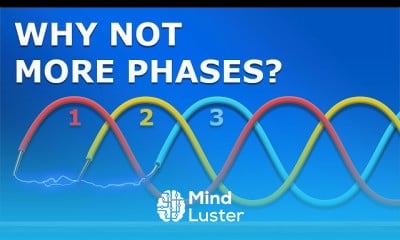
Three Phase Power systems course, in this course you'll gain an in-depth understanding of three-phase electrical power, its advantages, and its applications in industrial and commercial settings. Starting with fundamental concepts, the course explains how three-phase power differs from single-phase systems, offering more efficient energy transmission and stable power flow, making it ideal for heavy-duty equipment. You’ll learn about the structure of a three-phase system, including star and delta configurations, voltage levels, and the importance of phase sequence in power distribution. The course also covers essential calculations, such as line and phase voltage, power factor, and load balancing, helping you analyze and optimize three-phase systems effectively. Hands-on lessons will guide you through connecting and testing three-phase circuits, using tools like multimeters and oscilloscopes to measure voltage and current. Safety practices are emphasized throughout, ensuring you understand how to handle high-voltage systems safely. Additionally, you'll learn about troubleshooting common issues in three-phase systems, such as phase imbalance and harmonic distortion. By the end of the course, you’ll be equipped to design, implement, and maintain three-phase systems confidently, making this course ideal for engineers, electricians, and anyone interested in industrial power systems.
 To Register in Course you have to watch at least 30 Second of any lesson
 Understand three-phase power system fundamentals, including configurations, voltage levels, and phase sequence analysis
Perform essential calculations like line and phase voltage, power factor, and load balancing in three-phase systems
Operate and troubleshoot three-phase circuits using multimeters, oscilloscopes, and safety protocols for high-voltage systems
Design, implement, and maintain efficient three-phase power systems for industrial and commercial applications
4 Lessons • 1 h 9 m total
You must have an
Account
on the platform.
Complete all lessons.
Watch at least 50% of Lesson Duration.
Get your Certificate free 🎉 !
4.6
(44 reviews)
Overall rating

Be the First One Review This Course
Ok

good

good

good

Good
Good

Good explanation

It was good experience
Nice explanation
Very good

Excellent

SUPER

Three Phase Power systems course, in this course you'll gain an in-depth understanding of three-phase electrical power, its advantages, and its applications in industrial and commercial settings. Starting with fundamental concepts, the course explains how three-phase power differs from single-phase systems, offering more efficient energy transmission and stable power flow, making it ideal for heavy-duty equipment. You’ll learn about the structure of a three-phase system, including star and delta configurations, voltage levels, and the importance of phase sequence in power distribution. The course also covers essential calculations, such as line and phase voltage, power factor, and load balancing, helping you analyze and optimize three-phase systems effectively. Hands-on lessons will guide you through connecting and testing three-phase circuits, using tools like multimeters and oscilloscopes to measure voltage and current. Safety practices are emphasized throughout, ensuring you understand how to handle high-voltage systems safely. Additionally, you'll learn about troubleshooting common issues in three-phase systems, such as phase imbalance and harmonic distortion. By the end of the course, you’ll be equipped to design, implement, and maintain three-phase systems confidently, making this course ideal for engineers, electricians, and anyone interested in industrial power systems.
Experience the full power of Mindluster with Premium.
No distractions, just pure education.
Cancel your subscription anytime